Case study
Roger Gracie Online Skool Academy Italy
Roger Gracie is a 10x IBJJF World Champion, ADCC champion, and IBJJF + ADCC Hall of Famer — never submitted in twenty years of competition. The Italy academy is led by Alberto Diaz, one of Roger’s top black belts. The work: take that lineage and build a digital school that lets a serious practitioner anywhere train as if they were on the mats with the lineage holders.
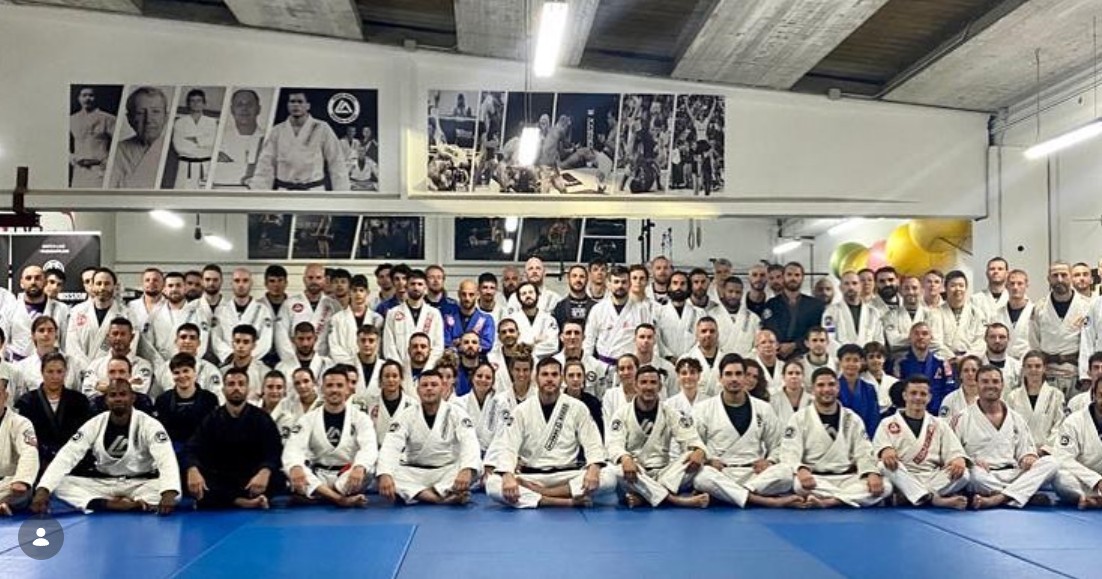
Roger Gracie at the center, Alberto Diaz next to him, surrounded by the Italy academy.
The situation.
The Italy operation had what every legacy brand in combat sports has: a distribution problem. The technique was world-class. The lineage was unimpeachable. The membership growth wasn’t matching either of them.
Most of the levers being pulled were one-shot — paid ads, promo bursts, the occasional viral post. Nothing was compounding. The community existed, but it lived inside private chats and a few mat-side conversations, not inside a system that could make it bigger.
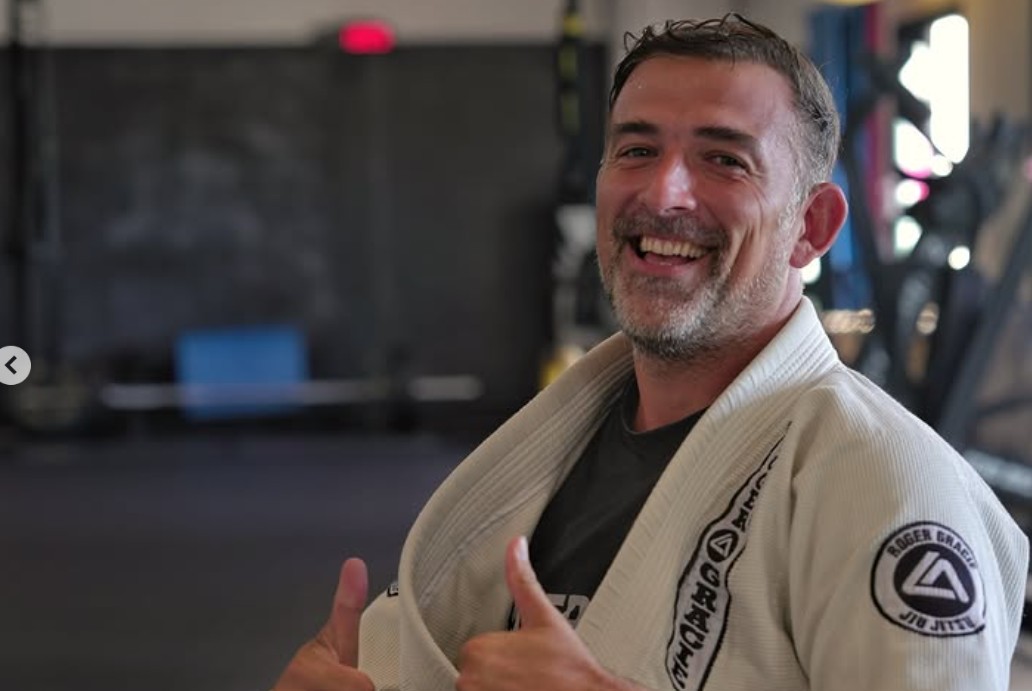
Alberto Diaz — head coach in Italy and one of Roger Gracie’s top black belts.
What the school actually is.
Most „online jiu-jitsu“ is a video archive with a paywall. This isn’t that. The Italy school is built around four pieces that work together:
On-demand technique library
100+ techniques broken into 3–5 minute lessons, organized by position — guard, mount, side control, and on. Built for learning that’s actually applicable on the mat, not entertainment.
Weekly live sessions
Monday from Rome. Friday from Cagliari, in the lunch hour. Live chat Q&A. Replays for everyone, every week. Members stay connected to real, in-person training even when they can’t be in the room.
Personalized video feedback
Members send a 3–5 minute video of their own rolling or technique. A coach sends back a personal video correction. It’s the closest thing to being corrected on the mat — and the single thing the algorithm-driven competition can’t replicate.
Private community
A peer group that trains alongside you, asks the questions, shares progress. The lineage holders show up in it. The community itself becomes part of why members stay.
What we did.
Two engines, both designed to compound — and both built to amplify what already exists rather than invent something new.
The growth engine: a content rhythm built on Alberto’s actual instruction and Roger’s lineage. Real technique, broken down for the format, distributed where serious practitioners are already watching. Every post is the top of the funnel and a sample of what the membership delivers — the trial-to-paid path is short by design.
The community engine: a structure that turns members into leaders. Onboarding ladders that make a new Basic member’s first month feel like an academy. Regional ambassadors. A seminar circuit that pulls people from the digital school onto the mats with Alberto and the lineage holders, and back again. The mats become the proof. The proof feeds the funnel.
The video-feedback layer is treated as the school’s flagship — not a bullet point on a pricing page. It’s the thing that makes a Platinum member significantly more sticky than a Basic, and the work focuses on that.
What happened.
The work is ongoing. The shorthand: trial-to-paid is up, churn is down, and the seminar pipeline is now a real revenue line, not an afterthought. The Platinum and Elite tiers — the ones with the personalized video feedback — are doing the heavy lifting on lifetime value.
Detailed numbers and the full write-up will be added once Q3 closes.